Provence: The Luberon Perched Villages & Agricultural Valleys
An analysis of rural Provence's limestone topography, agricultural lavender flowering windows, dry-stone masonry, and perched village settlements.
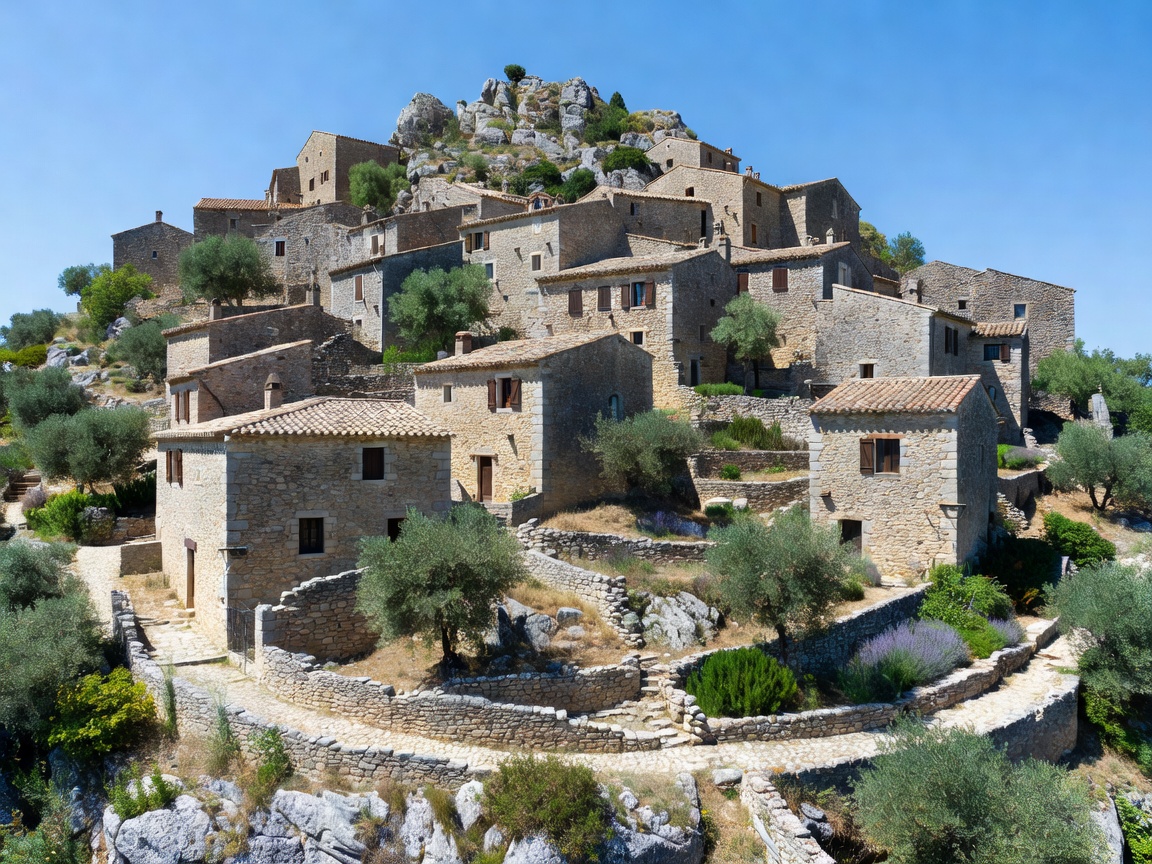
The Geography of Arid Limestone and Perched Settlement
Inland Provence is defined physically by its dry Mediterranean climate, the biting northern Mistral wind, and Cretaceous limestone massifs such as the Montagne Sainte-Victoire and the Luberon ridge. Throughout centuries of political instability and pirate raids along the coast, agricultural communities retreated upwards, constructing villages perchés (perched villages) that could defend vital harvest stores and springs.
1. The Luberon Valley: Gordes, Roussillon & Ménerbes
The Luberon Regional Natural Park encompasses a mosaic of olive groves, vineyards, and dense garrigue scrubland. Its settlements showcase differing geological foundations:
- Gordes: Clings to the southern edge of the Plateau de Vaucluse. Built of pale dry limestone (calcaire blanc), the village steps upward toward its Renaissance fortress. Nearby lies the twelfth-century Cistercian Abbaye de Sénanque, nestled in a secluded limestone thalweg.
- Roussillon: Stands in striking chromatic contrast, perched on the world's largest known ochre deposit. Its buildings are rendered in sixteen distinct pigments ranging from saffron yellow to deep carmine, flanked by the Sentier des Ocres canyon trail.
- Ménerbes and Bonnieux: Guard the southern flank of the Calavon valley, retaining fortified gates, cedar forests, and extensive stone-terrace cultivation (bancaus).
Botanical Phenology: The Lavender Bloom Window
Lavandula angustifolia (fine lavender) and Lavandin bloom across a tight seasonal spectrum determined by altitude. On the Plateau de Valensole, peak coloration typically occurs from mid-June to early July. In higher elevations around Sault, flowering often extends until late July or early August before mechanical distillation begins.
2. Rural Road Infrastructure and Transit Dynamics
Unlike Paris or the Riviera, the Luberon possesses minimal railway connectivity. Exploring this region requires private vehicle rental or dedicated cycling touring. Secondary departmental highways (such as the D900, D2, and D4) curve through steep gorges and mountain passes where speed limits are strictly monitored.
The weekly village open-air markets—such as Isle-sur-la-Sorgue on Sundays, Gordes on Tuesdays, and Apt on Saturdays—cause intense micro-congestion. Arriving before 08:30 is essential to secure parking within designated municipal zones outside ancient fortified perimeters.
Comparative Overview: Provence Micro-Territories
| Zone | Geological / Natural Base | Signature Settlement | Optimal Exploration Season | Mobility Requirement |
|---|---|---|---|---|
| Northern Luberon | White limestone cliffs & dry ravines | Gordes & Goult | April–May & September–October | Car or gravel bicycle |
| Valensole Plateau | Expansive alluvial plain, monoculture | Valensole & Riez | Late June to mid-July (Flowering) | Car essential |
| Sorgue Valley | Karstic resurgence, canal network | L'Isle-sur-la-Sorgue, Fontaine-de-Vaucluse | May through September | TER rail access at L'Isle-sur-la-Sorgue |
Pros & Cons of Provencal Travel
Merits
- Distinct sensory atmosphere created by pine resin, wild thyme, and lavender.
- Exceptional historical preservation of Romanesque stone architecture.
- Outstanding seasonal culinary markets offering truffles, goat cheeses, and olive oils.
Drawbacks
- High summer midday temperatures often exceeding 35°C with minimal shade in limestone ruins.
- Severe scarcity of public transit between smaller perched communes.
- Many small village services, restaurants, and shops shutter between November and March.
Strategic Advisory for Countryside Stays
Base yourself strategically in a central commune like Saint-Saturnin-lès-Apt or Bonnieux to limit driving times to under forty minutes in any direction. Because village lanes are exceptionally narrow and lack turning radiuses, always leave vehicles in signed outer-perimeter car parks (parking de délestage) rather than entering historic residential gates.