Nice & the French Riviera: Corniches, Coasts & Light
From the pebble foreshore of the Baie des Anges to the dramatic cliff-hugging balcony roads connecting Nice with Monaco and Menton.
The Maritime Borderland of Nice
The Côte d'Azur is not simply a leisure haven; it is a complex geological amphitheater where the maritime Alps plunge directly into the Mediterranean Sea. Nice, awarded UNESCO World Heritage designation as a "Winter Resort Town of the Riviera," preserves the dual identity of an ancient Ligurian-Sardinian county combined with a nineteenth-century aristocratic retreat.
1. The Promenade des Anglais and Vieux Nice
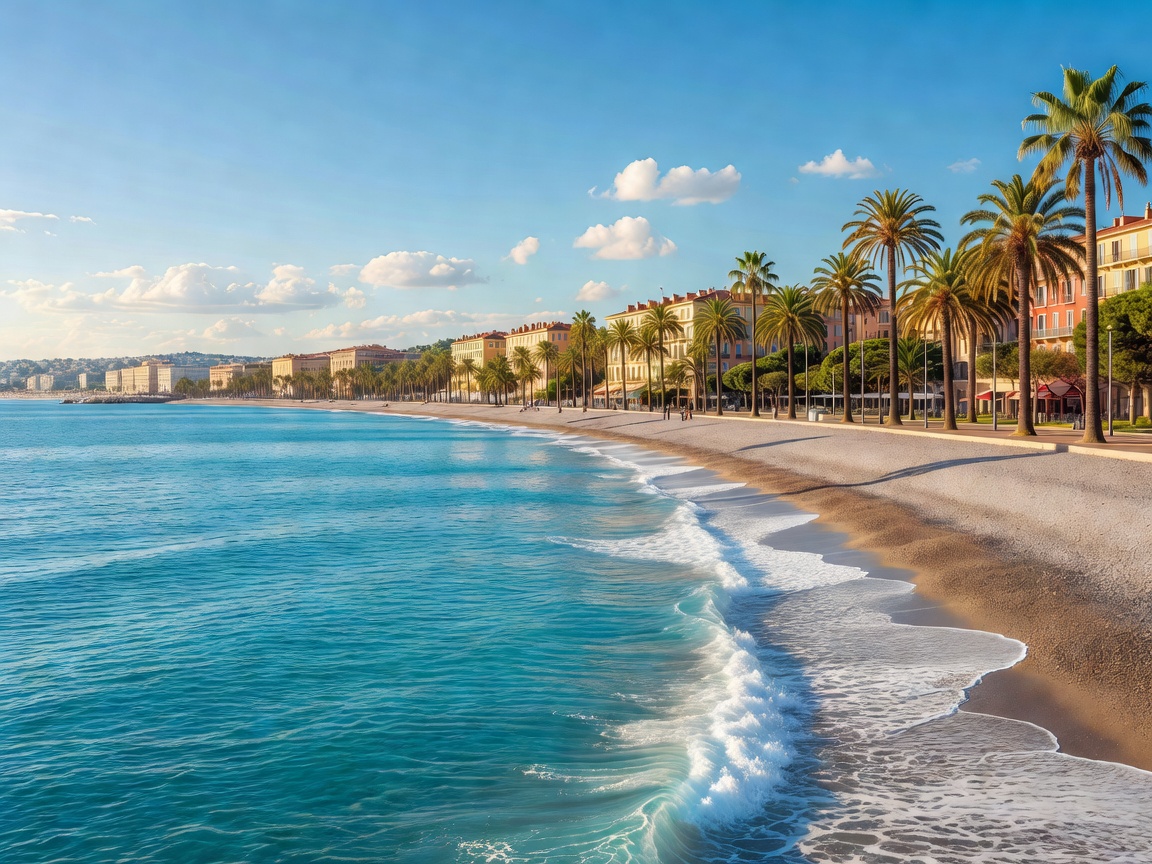
Extending seven kilometers along the Baie des Anges, the Promenade des Anglais represents an extraordinary engineering feat initiated in the 1820s. Fronted by smooth grey limestone shingles rather than golden sand, the beach provides an expansive municipal leisure space against an intense cobalt sea.
Directly behind the seafront rise the ochre and sienna facades of Vieux Nice (the Old Town). Characterized by narrow, sun-shielded streets, baroque churches such as the Cathédrale Sainte-Réparate, and the bustling Cours Saleya daily market, Vieux Nice retains its authentic Mediterranean pulse. The ascent to the Colline du Château offers the quintessential elevated vantage over the port and the sweeping coastline.
Topographical Observation: The Pebble Shore
Unlike sandy Atlantic or Languedoc strands, Nice’s pebble shore requires protective footwear for swimming access. Water clarity is exceptional because there is minimal sediment agitation during calm seas.
2. The Three Corniches: Engineering Masterpieces
Between Nice and the Italian border, the terrain ascends steeply, necessitating three parallel cliffside highways constructed at varying elevations:
- Basse Corniche (Route M6098): Traces the shoreline through Villefranche-sur-Mer, Saint-Jean-Cap-Ferrat, and Beaulieu-sur-Mer. Ideal for seaside villa architecture and tranquil harbors.
- Moyenne Corniche (Route M6007): Carved midway up the cliff face, passing directly beneath the perched eagle's nest village of Èze at approximately 400 meters altitude. Provides dramatic open sea perspectives.
- Grande Corniche (Route D2564): Commissioned under Emperor Napoleon I along the historical Roman Via Julia Augusta, reaching heights exceeding 500 meters at La Turbie. Offers vast vistas across Monaco and the entire Cap Martin peninsula.
Comparative Transit: Train vs. Automobile on the Coast
| Transport Mode | Route Coverage | Peak Season Feasibility | Key Advantage | Key Limitation |
|---|---|---|---|---|
| TER Rail Line (Zou!) | Cannes to Ventimiglia coastal corridor | High; trains run every 15–30 minutes | Avoids gridlock; stations situated near beaches | Cannot reach perched villages (Èze Village, Peille) |
| Private Vehicle / Rental | Three Corniches and backcountry gorges | Low to Moderate; intense summer congestion | Access to remote trailheads and high viewpoints | Extreme parking scarcity and high municipal tariffs |
| Lignes d'Azur Buses | Interurban routes up to inland villages | Moderate; subject to mountain road traffic | Economical flat fares for perched hamlets | Reduced schedules on Sundays and bank holidays |
Pros and Cons of Riviera Travel
Merits
- Exceptional luminous light quality that attracted Matisse, Chagall, and Picasso.
- Year-round mild Mediterranean microclimate sheltered by alpine foothills.
- Dense juxtaposition of high-culture museums and immediate maritime recreation.
Drawbacks
- Severe coastal overcrowding during peak July and August holiday periods.
- High hospitality price indexes relative to rural central France.
- Challenging driving conditions on narrow, winding corniche switchbacks.
Seasonal Timing & Microclimates
The optimal window for exploring the French Riviera falls during shoulder months: May to early June, and mid-September through October. During these periods, ambient temperatures remain pleasantly warm (20–25°C), the sea retains solar heat, and transit networks operate without the stifling congestion experienced during mid-summer.